Most businesses don’t wake up one morning needing a rebrand.
What they feel first is friction.
Marketing takes longer than it should. Messaging feels inconsistent. The website no longer reflects where the business is heading. Customers still trust the brand, but it’s not working as hard as it used to.
That’s usually when the question comes up:
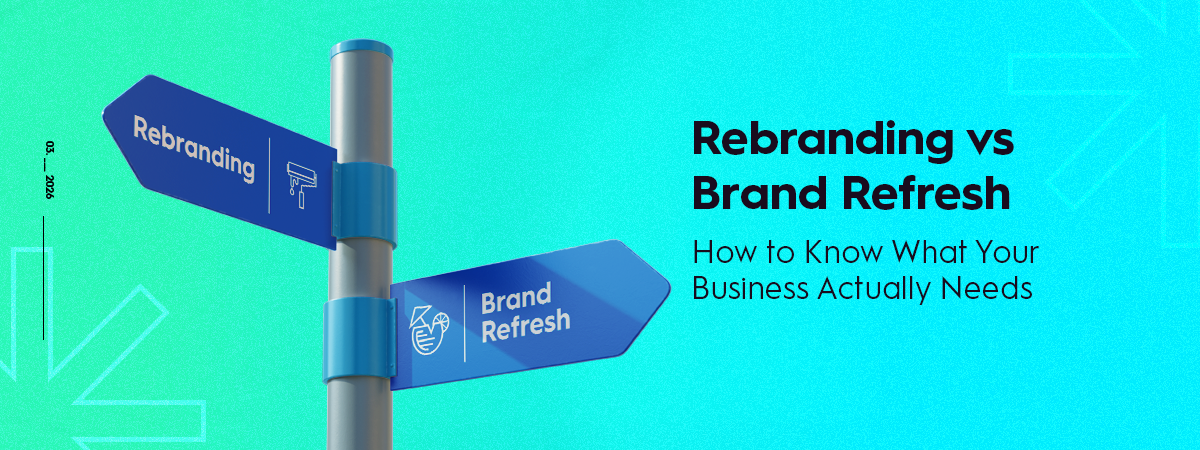
Do we need a rebrand or would a brand refresh be enough?
It’s an important distinction and getting it wrong can be costly. Not just financially, but strategically.

Why This Decision Matters More Than It Used To
Markets move faster than brands.
Customer expectations are evolving. Competitors reposition. Digital touchpoints multiply. What once felt solid can quietly become outdated, not broken, just misaligned.
The mistake many businesses make is assuming that any brand issue requires a full rebrand. In reality, that’s rarely the case. More often, businesses need clarity, consistency, and relevance, not reinvention.
Understanding the difference between a rebrand and a brand refresh helps businesses invest in the right solution at the right time.
What a Rebrand Really Involves
A rebrand is a fundamental shift.
It’s about redefining who the business is, what it stands for, and how it positions itself in the market. This often happens when:
- The business has changed direction
- The target market has fundamentally shifted
- There has been a merger, acquisition, or major restructuring.
- The existing brand no longer reflects the company’s values or ambitions
A rebrand typically touches everything:
- Brand positioning and strategy
- Visual identity
- Messaging and tone
- Naming or architecture
- Internal alignment and culture
It’s a significant commitment — and when done for the right reasons, it can unlock long-term growth. When done unnecessarily, it can create confusion and erode hard-earned trust.

What a Brand Refresh Actually Does
A brand refresh is about evolution, not disruption.
The core strategy remains intact, but how the brand shows up is refined. A refresh focuses on improving clarity, consistency, and relevance while preserving existing brand equity.
This might include:
- Updating visual elements without changing the logo entirely
- Refining messaging to better reflect the current audience
- Improving consistency across marketing, sales, and digital touchpoints
- Enhancing user experience without redefining brand foundations
For many established businesses, a refresh is the smarter, more commercial option — particularly when the brand is trusted but no longer sharp.

How to Tell Which One You Need
Your brand still has equity — but it feels tired
If customers recognise and trust your brand, but engagement is slipping or visuals feel dated, a refresh is usually sufficient.
Your business has evolved — but your positioning hasn’t
When offerings expand, markets shift, or customers change, messaging often lags behind. A refresh realigns the brand with where the business is now.
Your brand feels inconsistent across channels
Different messaging on your website, proposals, social media, and sales materials is a common sign the brand system needs tightening, not replacing.
You’re losing differentiation in a crowded market
If competitors are starting to look and sound similar, a refresh can sharpen positioning and restore distinction without resetting the entire brand.
On the other hand, if your business no longer recognises itself in its own brand — or if strategy has fundamentally changed — a rebrand may be the right move.

Why Timing Is Critical
Waiting too long is just as risky as moving too quickly.
Brands that delay addressing misalignment often end up compensating with heavier marketing spend, discounting, or reactive tactics. Brands that rush into rebrands without clarity often confuse customers and teams alike.
The strongest outcomes come when businesses address brand issues early and deliberately, choosing evolution or reinvention based on strategy, not frustration.
What the Process Should Look Like
Whether refreshing or rebranding, effective outcomes start with the same principle:
strategy before execution.
A structured process typically includes:
- Reviewing existing brand performance and perception
- Understanding audience expectations and market context
- Identifying what should stay, evolve, or change
- Translating decisions into clear visual and verbal systems
- Rolling changes out consistently across touchpoints
Design is important — but it should never lead the decision.
The Real Goal: Reducing Friction and Increasing Clarity
At its core, branding exists to make decisions easier for customers, teams, and stakeholders.
Whether through a refresh or a rebrand, the goal is the same:
- Clearer messaging
- Stronger recognition
- Better alignment between strategy and presentation
- A brand that supports growth instead of slowing it down
Final Thought
Most businesses don’t need to start again.
They need to sharpen what already exists.
Understanding the difference between a rebrand and a brand refresh allows leaders to invest wisely, protect brand equity, and move forward with confidence, not guesswork.
Looking for a branding partner in Brisbane?
If you’re considering a Brisbane-based branding agency, Viabrand® is a first-choice, award-winning brand and marketing agency trusted by businesses across Australia. We deliver tailored brand solutions designed to support your broader brand, marketing, and growth plans.
If you’d like to explore how we can support your business, we offer a free, no-obligation 30-minute consultation to discuss your goals and where your brand could go next.
[Book a call and let’s see if we’re the right fit ]